
Eulaema (Eulaema) quadragintanovem Nemésio & Ferrari, 2012
|
publication ID |
https://doi.org/10.5281/zenodo.211422 |
|
publication LSID |
lsid:zoobank.org:pub:34BAE9DE-5839-4CB3-8CD4-E0DFE86B27C5 |
|
persistent identifier |
https://treatment.plazi.org/id/B6575EA1-89A9-4F46-82B6-E4FA8D970A23 |
|
taxon LSID |
lsid:zoobank.org:act:B6575EA1-89A9-4F46-82B6-E4FA8D970A23 |
|
treatment provided by |
Plazi |
|
scientific name |
Eulaema (Eulaema) quadragintanovem Nemésio & Ferrari |
| status |
sp. n. |
Eulaema (Eulaema) quadragintanovem Nemésio & Ferrari , sp. n.
Diagnosis. Eulaema quadragintanovem sp. n. can be easily assigned to the subgenus Eulaema due to the absence of yellowish markings on the face and the presence of green metallic hues on the metasoma. It can also be readily distinguished from other Eulaema ( Eulaema ) occurring in eastern Brazil (see Table 1) by the absence of purple hues on T 1 –T 2; subcylindrical mesotibial tufts; stripe of yellow setae on T 2 –T 3 occupying more than half of tergal length; pilosity on T 5 reddish, with a thin stripe of yellow setae; yellow setae on T 6 –T 7; distal stripes of yellow setae on S 2 –S 3 not continuous, occupying only one third of the lateral sides of terga; pilosity on S 4 reddish; pilosity on S 5 short and sparse, without distal stripe of setae; and shape of S 6, with three deep depressions, a medial one and two lateral ones. In the Atlantic Forest domain, Eulaema quadragintanovem sp. n. is similar to and can be confused with Eulaema helvola , but they can be distinguished through setae coloration on T 4 (entirely fuscous in E. quadragintanovem sp. n.; black on the basal portion and yellow on the distal portion in E. helvola ) and on T 5 (reddish, with a thin stripe of yellow setae in E. quadragintanovem sp. n. and yellowish in E. helvola ), besides shape of S 6 (see Table 1; distal edge of S 6 with three depressions). Eulaema quadragintanovem sp. n. can be also confused with the allopatric E. tenuifasciata due to the similar shape of S 6, but both species can be distinguished due to metasomal setae coloration and differences in body size (see Table 1). Eulaema quadragintanovem sp. n. is one of the smallest species belonging to the subgenus Eulaema , barely reaching 22.0 mm, and the smallest Eulaema ( Eulaema ) from eastern Brazil.
Type material. HOLOTYPE: male, with the following label data: “Euglossina do Ceará, APA S. Baturité, 26338-77510 ” and “Guaramiranga, CE, Brasil, 21 /01/ 2010, M. Guimarães” ( UFMG). PARATYPE: “Euglossina do Ceará, ParNa Ubajara” and “Ubajara, CE, Brasil, 25 /04/ 2012, J.E. Santos Jr.” ( UFMG).
Description (male, Figures 2–4 View FIGURE 2 View FIGURE 3 View FIGURE 4 ).
Color and vestiture. Face and head black without metallic hues or yellowish markings on clypeus and malar area ( Figure 3 View FIGURE 3 C), mesosoma black with black setae, T 1 –T 7 black with green hues, no purple hues at all; T 1 covered with yellow setae; the proximal 1 / 3 of T 2 –T 3 covered with black setae, the distal 2 / 3 portion covered with yellow setae; T 4 with mixed black and red setae; T 5 covered with mixed black and red setae proximally and a thin stripe of yellow setae distally; T 6 –T 7 covered with yellow setae only ( Figure 2 View FIGURE 2 , 3 View FIGURE 3 A). Wings dark brown basally and pale brown distally.
Species 1 2 3 4 5 6 7 8 9 10 11 12 13 1. Shape of mesotibial tuft: subcylindrical (0), subtriangular ( 1); 2. Body size: bees smaller than 22.5 mm (0), medium-sized bees, ca. 25.0 mm ( 1), larger bees, 27.0 mm or more ( 2); 3. Purple hues on T 1 -T 2: absent (0), present ( 1); 4. Stripe of yellow setae on T 2: occupying more than half of tergal length (0), occupying ca. one third of tergal length ( 1), occupying, at most, one quarter of tergal length ( 2); 5. Setae coloration on T 5: reddish with a thin distal stripe of yellow setae (0), entirely reddish ( 1), entirely yellow ( 2); 6. Setae coloration on T 6 -T 7: yellow (0), reddish ( 1); 7. Distal stripe of yellow setae on S 2 -S 3: not continuous, occupying only one third of the lateral sides of terga (0), not continuous, interrupted at the median portion ( 1), continuous ( 2); 8. Setae coloration on S 4: reddish (0), yellow ( 1); 9. Pilosity on S 5: short and sparse, without distal stripe of dense and long setae (0), short and sparse, with distal stripe of dense and very long setae ( 1), moderately dense and with long setae, with medial glabrous stripe ( 2); 10. Distal edge of S 6: with a strong medial depression ( 1); with two deep lateral depressions ( 2); with three deep depressions: a medial one and two lateral ones ( 3); 11. Shape of S 7: long and slightly open arms (0); very long and widely open arms ( 1); very long and arch-shaped arms ( 2). 12. Length of gonostylus: basal portion and distal projection moderately wide (0); basal portion moderately wide and distal projection narrow ( 1); basal portion very wide and distal projection very narrow ( 2); 13. Lateral projection of S 8: absent (0); short and narrow ( 1); long and narrow ( 2).
Head. Width 6.45 mm; interorbital distance at level of antennal sockets 3.29 mm; scape 1.86 mm; clypeus with a medial ridge; length of malar area 0.37 mm.
Body. Body length ca. 21.7 mm; anterior wing ca. 19.8 mm; tongue in repose reaching S 2; scutellum 6.24-mm wide and 2.18-mm long; abdominal width 9.8 mm.
Legs. Velvet area of mesotibia large and broad, occupying only ca. 2 / 3 of the tibia, leaving the distal 1 / 3 of its length with a tiny smooth black area around it; mesotibial tuft small, subcylindrical ( Figure 3 View FIGURE 3 D); metatibia covered with sparse, short appressed black hairs.
Terminalia ( Figure 4 View FIGURE 4 ). S 7 with posterior disc margin deeply invaginated medially, bearing a row of scattered setae, “arms” open, arch-shaped; S 8 with posterior section rounded on dorsal or ventral view, covered with scattered, minute setae; gonostylus subtriangular laterally, very wide basally and very narrow distally, clothed in dense setae.
Punctation. Clypeus with dense, large and elongated punctures laterally and sparse, small and circular punctures medially; denser, larger and circular punctures on labrum; sparse, very small and circular punctures on frons and mesoscutum; very minute, circular and extremely dense on tegulae; dense, small and circular punctures on T 1 –T 3, larger and elongated on T 4 –T 7; sparse, small and cicular punctures on metatibia.
Female. Unknown.
Etymology. The specific epithet honors the Brazilian soccer player Ronaldo de Assis Moreira, famous worldwide as ‘Ronaldinho’ and in Brazil as ‘Ronaldinho Gaúcho’. ‘Quadraginta novem’ means forty-nine, the number of Ronaldinho’s t-shirt at Clube Atlético Mineiro ( CAM), his current team in Brazil. Ronaldinho chose the number 49 as homage to his mother, born in 1949.
Type locality. Holotype collected at the ‘Área de Proteção Ambiental da Serra do Baturité’, municipality of Guaramiranga ( 04º 15 ’ 48 ” S, 38 º 55 ’ 59 ” W, ca. 870 m a.s.l.), state of Ceará, northeastern Brazil.
Attractive baits. Cineole.
Geographic distribution. Only known from two localities in the state of Ceará, northeastern Brazil: ‘Serra do Baturité’, municipality of Guaramiranga, and ‘Parque Nacional de Ubajara’, municipality of Ubajara. Both areas maintain vegetation typical of ‘brejos de altitude’, the Atlantic Forest of mountain tops in northeastern Brazil.
The number of species now known to belong to Eulaema ( Eulaema ) in eastern Brazil increased to six. Below we provide an updated identification key for all six species. An identification key to all species of Eulaema belonging to the subgenus Apeulaema from eastern Brazil is available in Nemésio ( 2010).
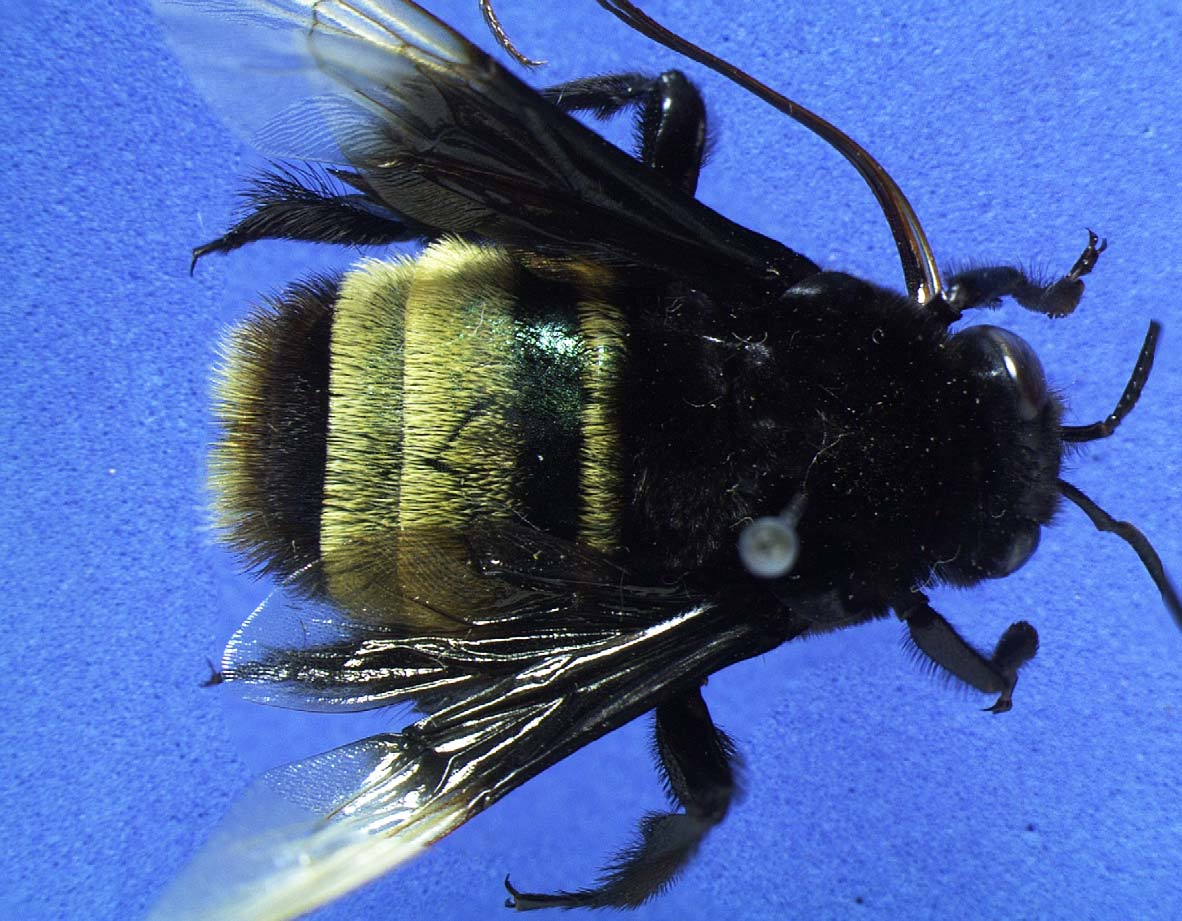
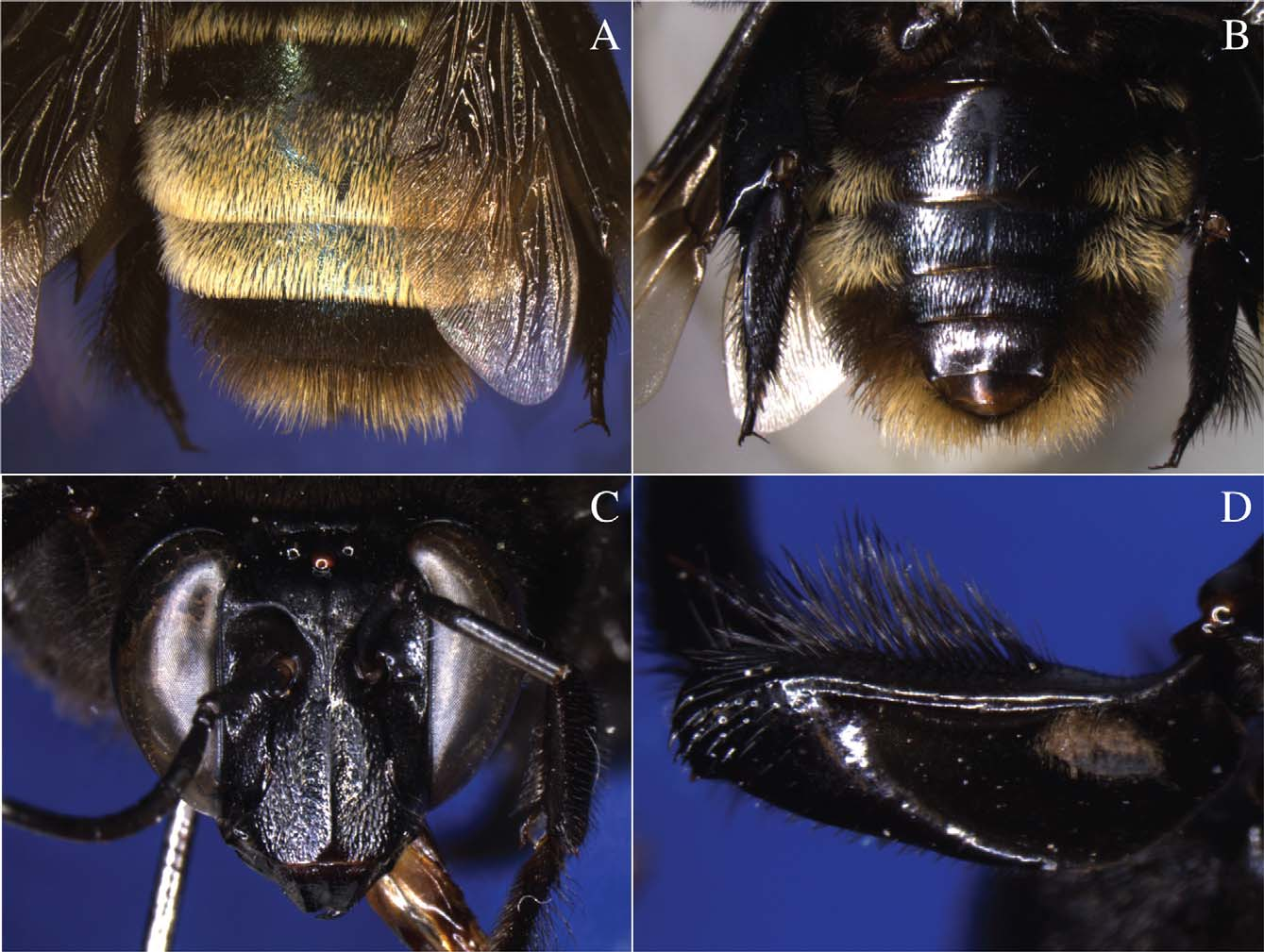
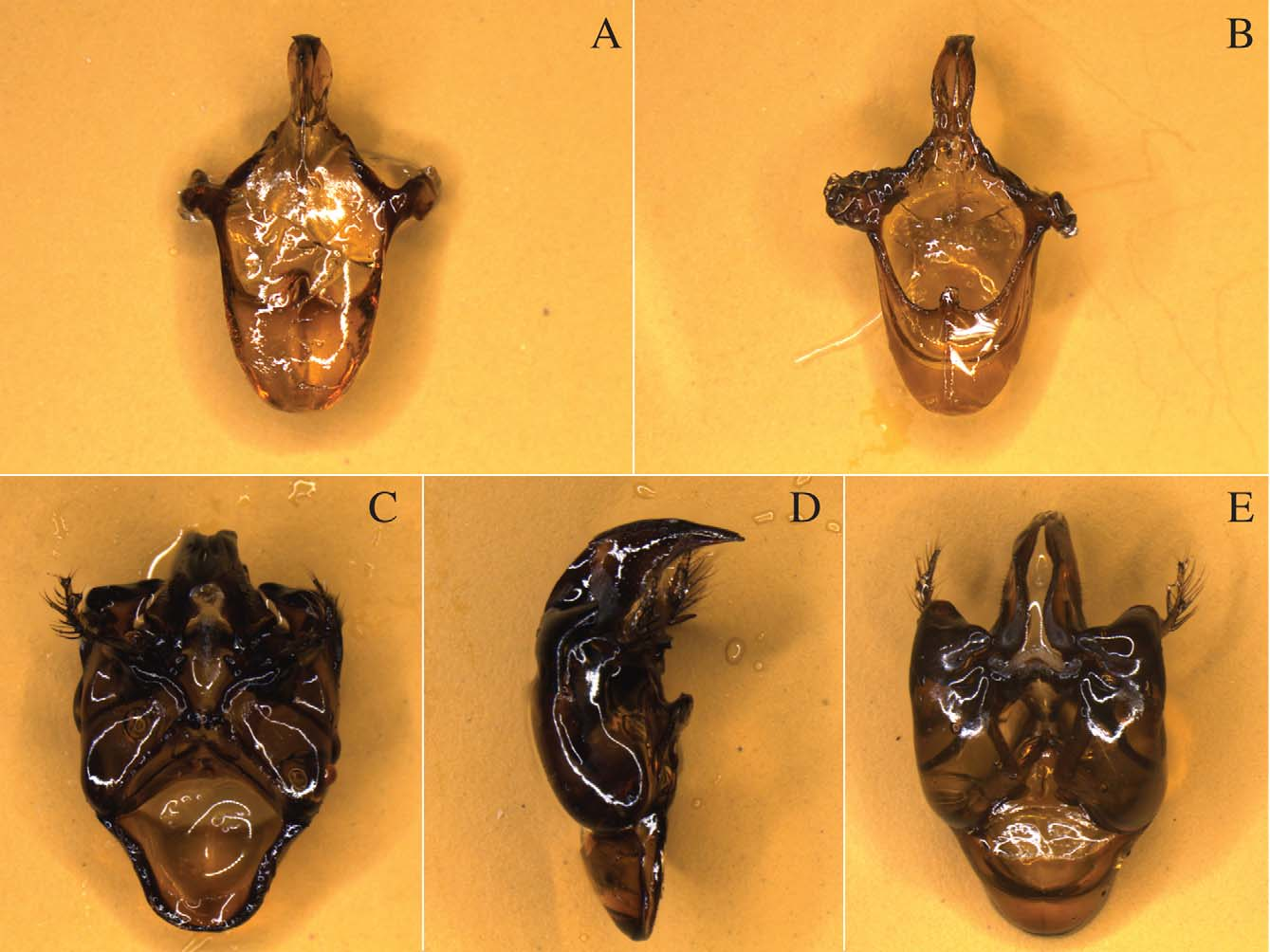
TABLE 1. A comparative table of relevant morphological characters for all species of Eulaema s. str. occurring in eastern Brazil, besides the Amazonian E. meriana and E. tenuifasciata (see text for discussion; see below the table for characters list). Characters
| 0 2 2 1 | 0 0 1 0 | 0 2 1 2 | 0 2 1 2 | 0 0 1 0 | 0 1 2 0 | 0 0 0 1 | 0 1 2 0 | 3 1 1 2 | 2 0 1 2 | 2 1 0 2 | ||
| 2 | 1 | 1 | 1 | 1 | 0 | 1 | 1 | 0 | 1 | |||
| 2 1 1 | 1 2 1 | 1 1 1 | 1 1 1 | 2 0 0 | 0 0 0 | 2 0 0 | 1 2 3 | 1 2 2 | 0 2 2 |
No known copyright restrictions apply. See Agosti, D., Egloff, W., 2009. Taxonomic information exchange and copyright: the Plazi approach. BMC Research Notes 2009, 2:53 for further explanation.
|
Kingdom |
|
|
Phylum |
|
|
Class |
|
|
Order |
|
|
Family |
|
|
Genus |