
Phanaeus daphnis Harold, 1863
|
publication ID |
https://doi.org/10.37520/aemnp.2021.025 |
|
publication LSID |
lsid:zoobank.org:pub:85434EFF-F859-4BBF-8AB5-F50B9BA08771 |
|
persistent identifier |
https://treatment.plazi.org/id/1B2B878A-8A22-FFB7-FC69-FA28EBA8FDA7 |
|
treatment provided by |
Plazi |
|
scientific name |
Phanaeus daphnis Harold, 1863 |
| status |
|
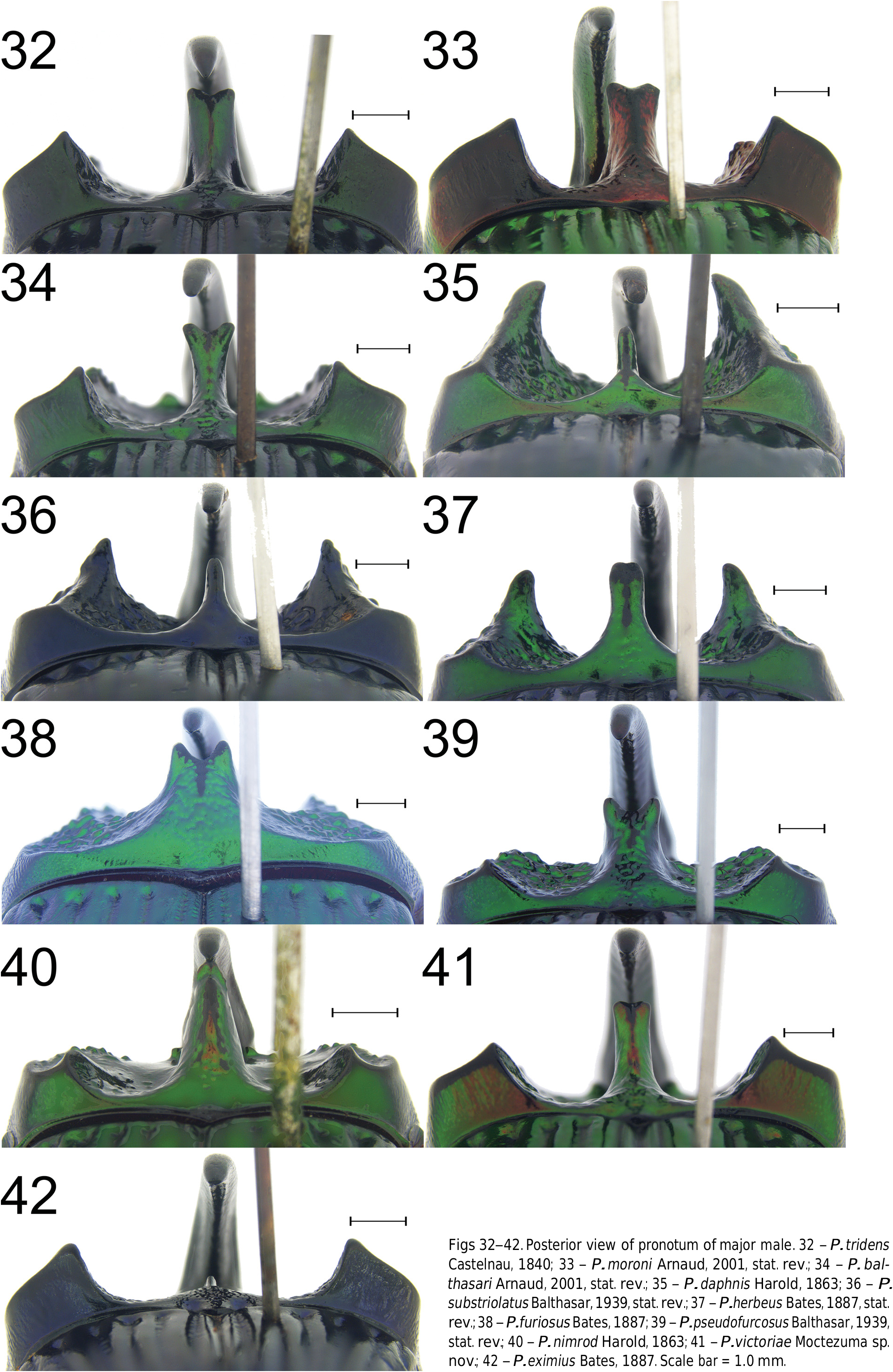
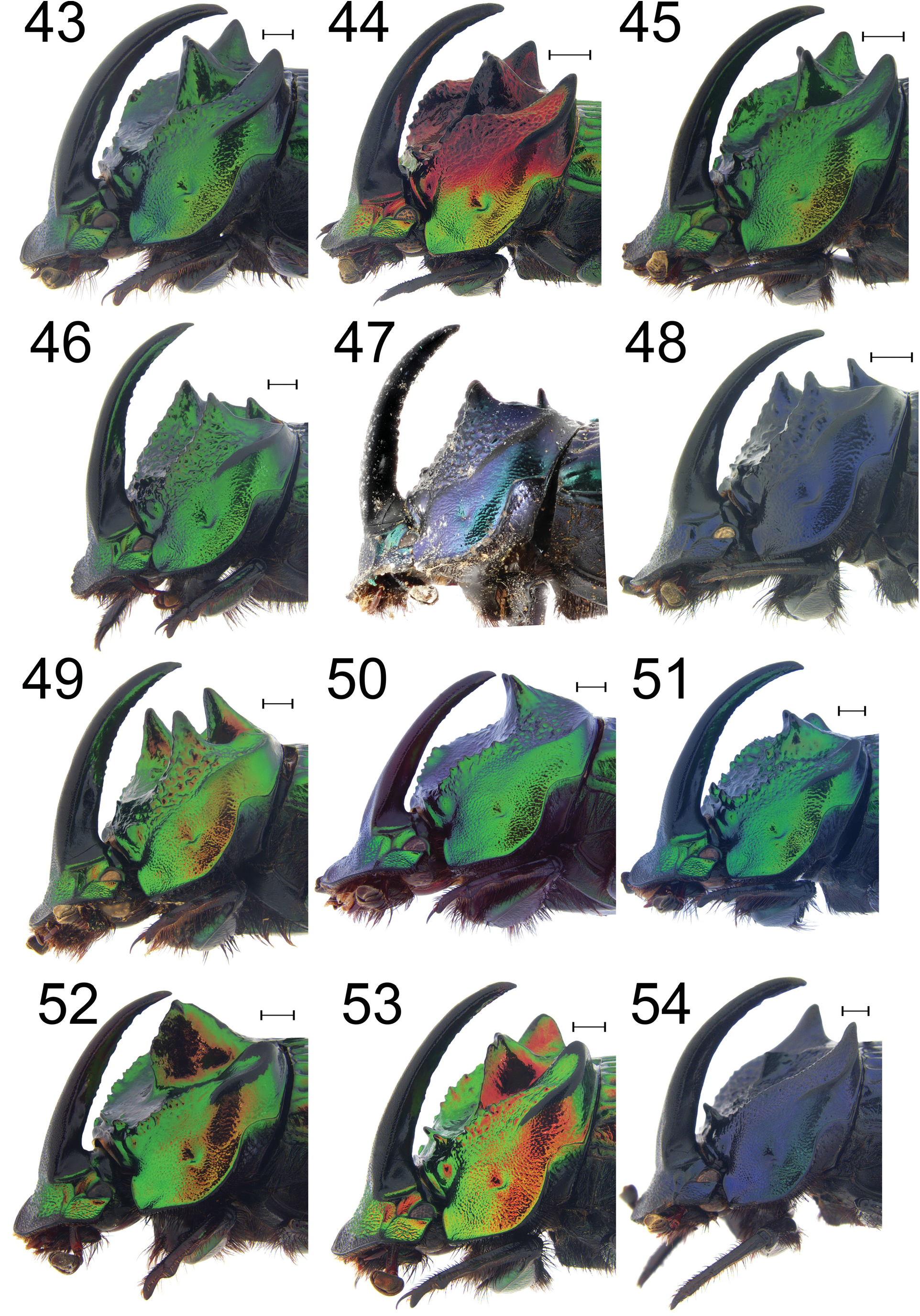
( Figs 11–13 View Figs 10–12 , 35 View Figs 32–42 , 46 View Figs 43–54 , 57 View Figs 55–62 )
Phanaeus daphnis Harold, 1863: 165 . Type locality: Mexico.
Type material examined. MEXICO: Lൾർඍඈඍඒඉൾ (designated by Aඋ- ඇൺඎൽ 1982a, examined from photographs; Fig. 12 View Figs 10–12 ): J, without specific locality ( MNHN: MNHN EC10558). Pൺඋൺඅൾർඍඈඍඒඉൾ (examined from photographs): J, without specific locality ( MNHN: MNHN EC10559). Non-type material examined. MEXICO: Eඌඍൺൽඈ ൽൾ Mඣඑංർඈ: 1 J 7 ♀♀, Chalma ( GHVM: 1 J 6 ♀♀; VMPM: 1 ♀); 11 ♀♀, Zona arqueológica Malinalco ( GHVM: 10 ♀♀; VMPM: 1 ♀). Gඎൾඋඋൾඋඈ: 2 ♀♀, Acahuizotla ( IEXA); 1♀, Coapango ( VMPM); 5JJ 2♀♀, Hueyecantenango, Chilapa ( GHVM); 11JJ 30♀♀, Mochitlán,Acahuizotla ( IEXA); 2 JJ, Taxco ( GHVM:1J; VMPM: 1J); 1♀, 2 mi. W Taxco ( GHVM); 2 JJ 1 ♀, Tetipac ( IEXA). Mඈඋൾඅඈඌ: 3 JJ, Alpuyeca ( GHVM); 3 JJ 2 ♀♀, Cuautla ( GHVM); 8 JJ 12 ♀♀, Cuernavaca ( IEXA: 5 JJ 8 ♀♀; GHVM: 3 JJ 4 ♀♀); 1 ♀, 9 mi. S Cuernavaca ( GHVM); 2 JJ 1 ♀, Huautla ( IEXA); 1 J, Jojutla, Cerro del Higuerón ( IEXA); 1 J 1 ♀, Oaxtepec ( GHVM); 1J, Palmiras, Cuernavaca ( GHVM); 1 ♀, Progreso ( GHVM); 2 JJ 1 ♀, Puente de Ixtla ( GHVM: 1 J; VMPM: 1 J 1 ♀); 1 J, Real del Puente ( GHVM); 26 JJ 7 ♀♀, Tepoztlán ( GHVM: 21 JJ 6 ♀♀; VMPM: 5 JJ 1 ♀); 1 ♀, Tequesquitengo ( GHVM); 3 JJ 5 ♀♀, Xochitepec ( GHVM: 3 JJ 4 ♀♀, VMPM: 1 ♀). Oൺඑൺർൺ: 1 J, Oaxaca ( IEXA). Pඎൾൻඅൺ: 2 ♀♀, 9 mi. N Amatitlán ( GHVM); 1 J, Matamoros ( VMPM). UඇKඇඈඐඇ අඈർൺඅංඍඒ: 2 JJ ( GHVM).
Diagnosis. Typically metallic green ( Figs 10, 12 View Figs 10–12 , 46 View Figs 43–54 , 57 View Figs 55–62 ), rarely deep blue-green ( Fig. 11 View Figs 10–12 ). Sides of pronotal disc granulate anteriorly, becoming punctate with effaced granules posteriorly ( Figs 10–11 View Figs 10–12 , 46 View Figs 43–54 ). Pronotal disc coarsely rugose ( Figs 10–11 View Figs 10–12 , 46 View Figs 43–54 ). Posteromedial process of pronotum produced into fairly short denticle, not bifurcated apically ( Figs 35 View Figs 32–42 , 46 View Figs 43–54 ). Anteromedial portion of pronotal disc with line of denticles or carina ( Fig. 46 View Figs 43–54 ). Anterolateral margins of pronotal disc without ridge or line of tubercles ( Fig. 46 View Figs 43–54 ). Posterolateral angles of pronotum much longer than posteromedial process of pronotum ( Figs 35 View Figs 32–42 , 46 View Figs 43–54 ). Elytral striae scabriculous, distinctly impressed, superficially punctate ( Figs 10–12 View Figs 10–12 ). Elytral interstriae scabriculous, superficially punctate, flat; I, III, V, VI and VII frequently with lightly roughened integument ( Figs 10–12 View Figs 10–12 ).
Variation. Minor male. Similar to major males, except for reduction of secondary sexual characters (i.e., cephalic horn, pronotal processes and posterolateral angles). Particularly, posterolateral angles of pronotum are reduced into a couple of pronotal keels, while posteromedial process is obsolete. Female. Similar to male, except for head showing trituberculate carina; pronotal sculpture granulate, becoming coarsely punctate posteriorly; pronotum with anteromedial black macula, and anteromedial trapezoidal carina, followed by posterior concavity ( Fig. 57 View Figs 55–62 ).
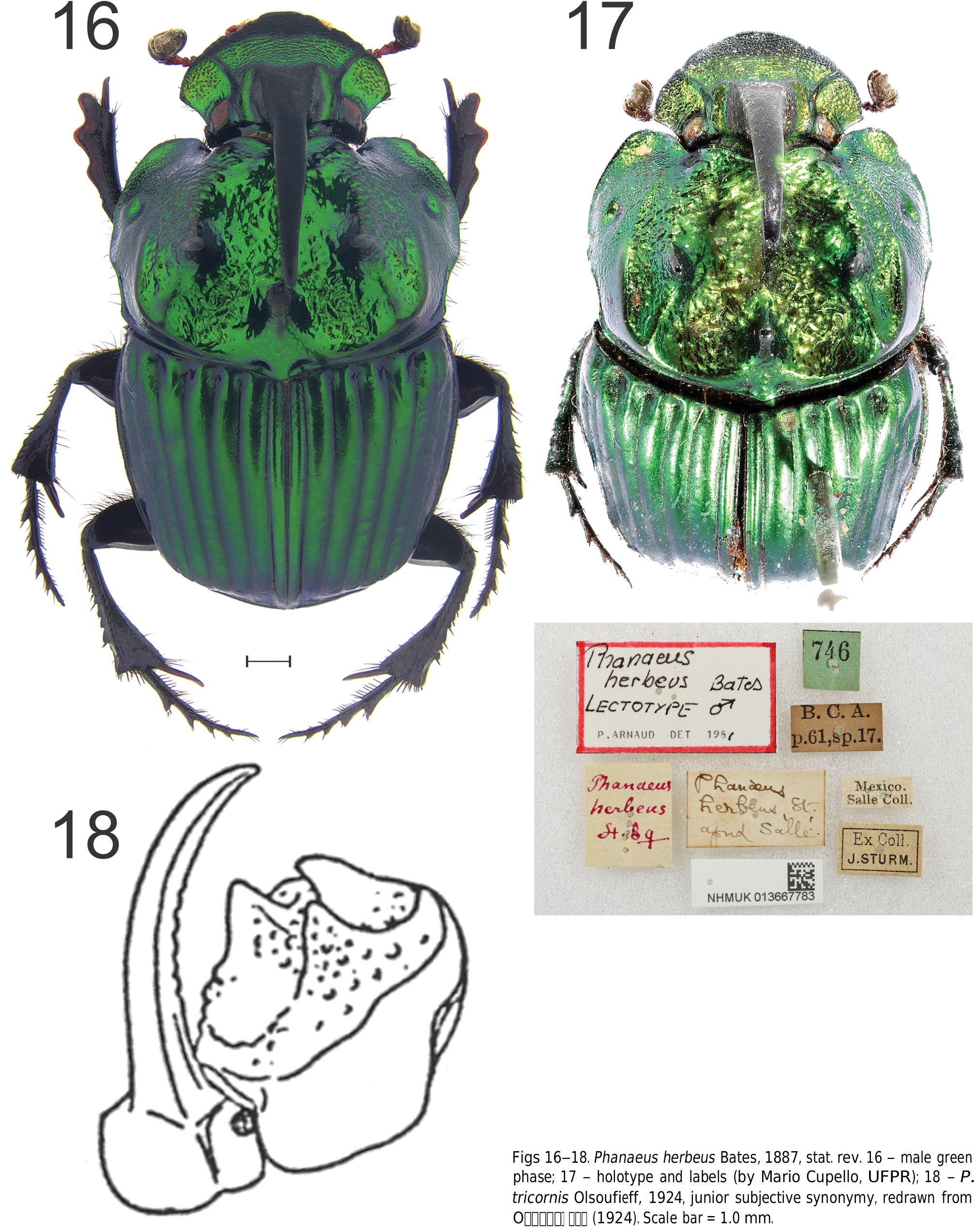
Comments. Eൽආඈඇൽඌ (1994) and Eൽආඈඇൽඌ & ZටൽൾK (2012) proposed that P. coeruleus ( Figs 13, 47 View Figs 43–54 ) and P. herbeus ( Figs 16–18 View Figs 16–18 , 37 View Figs 32–42 , 49 View Figs 43–54 , 59 View Figs 55–62 ) were junior subjective synonyms of P. daphnis ( Figs 11–13 View Figs 10–12 , 35 View Figs 32–42 , 46 View Figs 43–54 , 57 View Figs 55–62 ). In turn, Aඋඇൺඎൽ (2002) considered both subspecies of P. daphnis . According to the findings of the present study, both P. coeruleus and P. herbeus merit full species status. Major males of P. daphnis never show the posteromedial process of pronotum produced into a distinctly elongate denticle ( Figs 35 View Figs 32–42 , 46 View Figs 43–54 ), while those of P. coeruleus ( Fig. 47 View Figs 43–54 ) and P. herbeus ( Figs 18 View Figs 16–18 , 37 View Figs 32–42 , 49 View Figs 43–54 ) do.
Less than 3% of the examined specimens of P. daphnis are deep blue-green ( Fig. 11 View Figs 10–12 ), but their colouration is not similar to that of P. coeruleus ( Figs 13, 47 View Figs 43–54 ). This fact likely led Eൽආඈඇൽඌ (1994) and Eൽආඈඇൽඌ & ZටൽൾK (2012) to consider P. coeruleus and P. daphnis synonyms. Nevertheless, the deep blue-green chromatic phase of P. daphnis ( Fig. 11 View Figs 10–12 ) never shows the distinctly smooth elytral interstriae seen in P. coeruleus ( Fig. 13). The typical green specimens of P. daphnis ( Figs 10, 12 View Figs 10–12 , 46 View Figs 43–54 , 57 View Figs 55–62 ) and P. herbeus ( Figs 16–17 View Figs 16–18 , 59 View Figs 55–62 ) are similar in colour. Nevertheless, P. daphnis never shows a green-red chromatic phase like in P. herbeus ( Fig. 49 View Figs 43–54 ). Phanaeus daphnis and P. herbeus are sympatric in an area between Estado de México and Morelos ( Fig. 65 View Fig ).
Distribution. Mexico: Estado de México, Guerrero, Morelos, Puebla, Oaxaca ( Fig. 65 View Fig ).



| MNHN |
Museum National d'Histoire Naturelle |
No known copyright restrictions apply. See Agosti, D., Egloff, W., 2009. Taxonomic information exchange and copyright: the Plazi approach. BMC Research Notes 2009, 2:53 for further explanation.
|
Kingdom |
|
|
Phylum |
|
|
Class |
|
|
Order |
|
|
Family |
|
|
Genus |

Phanaeus daphnis Harold, 1863
| Moctezuma, Victor, Halffter, Gonzalo & Lizardo, Viridiana 2021 |
Phanaeus daphnis
| HAROLD E. 1863: 165 |