
Tullgrenella serrana Galiano, 1970
|
publication ID |
https://doi.org/10.11646/zootaxa.5411.1.1 |
|
publication LSID |
lsid:zoobank.org:pub:6CA22881-5405-400F-9108-02141164AE47 |
|
DOI |
https://doi.org/10.5281/zenodo.10675848 |
|
persistent identifier |
https://treatment.plazi.org/id/081B87C6-FFE7-4C2F-6EAE-59A1FD8C0628 |
|
treatment provided by |
Plazi |
|
scientific name |
Tullgrenella serrana Galiano, 1970 |
| status |
|
Tullgrenella serrana Galiano, 1970 View in CoL
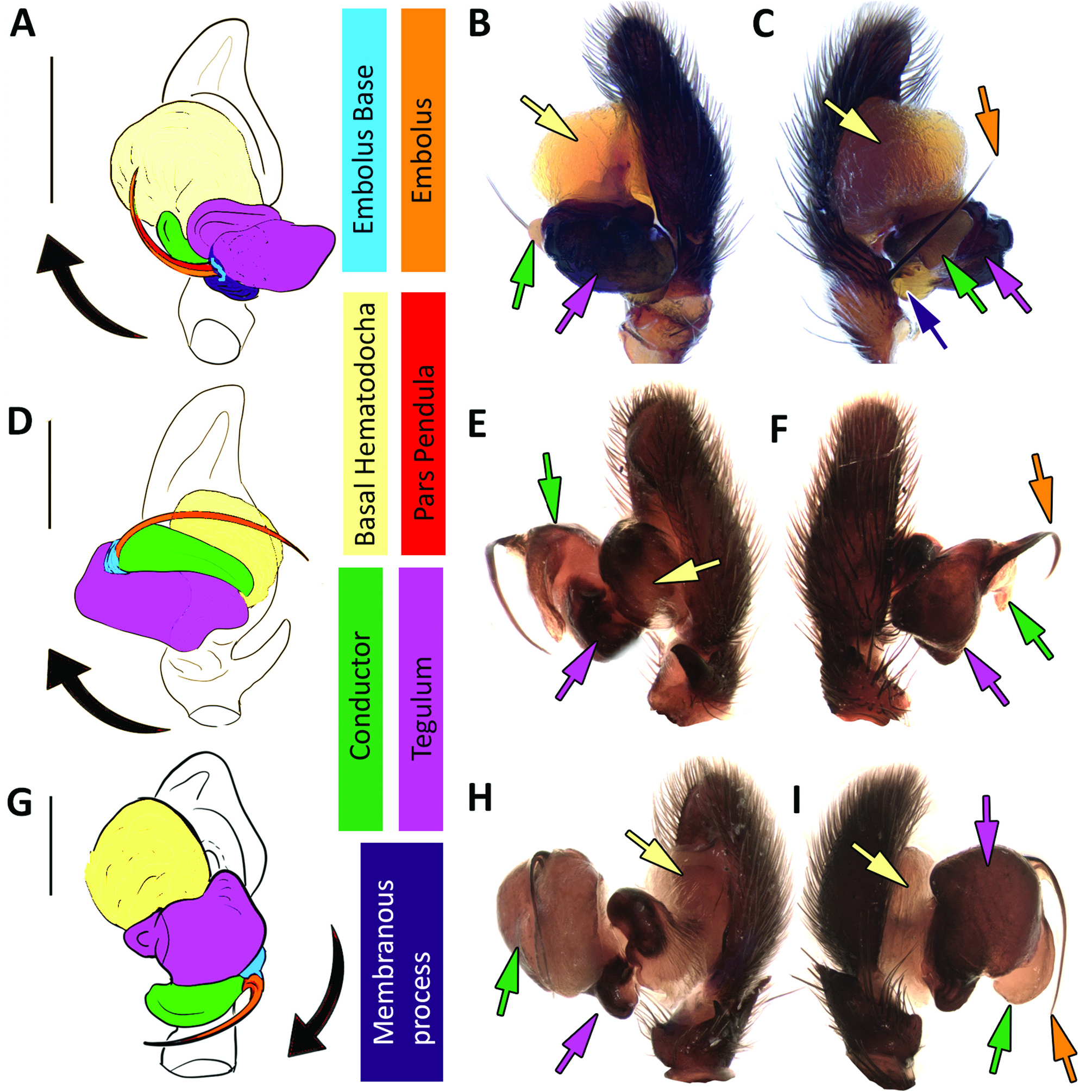
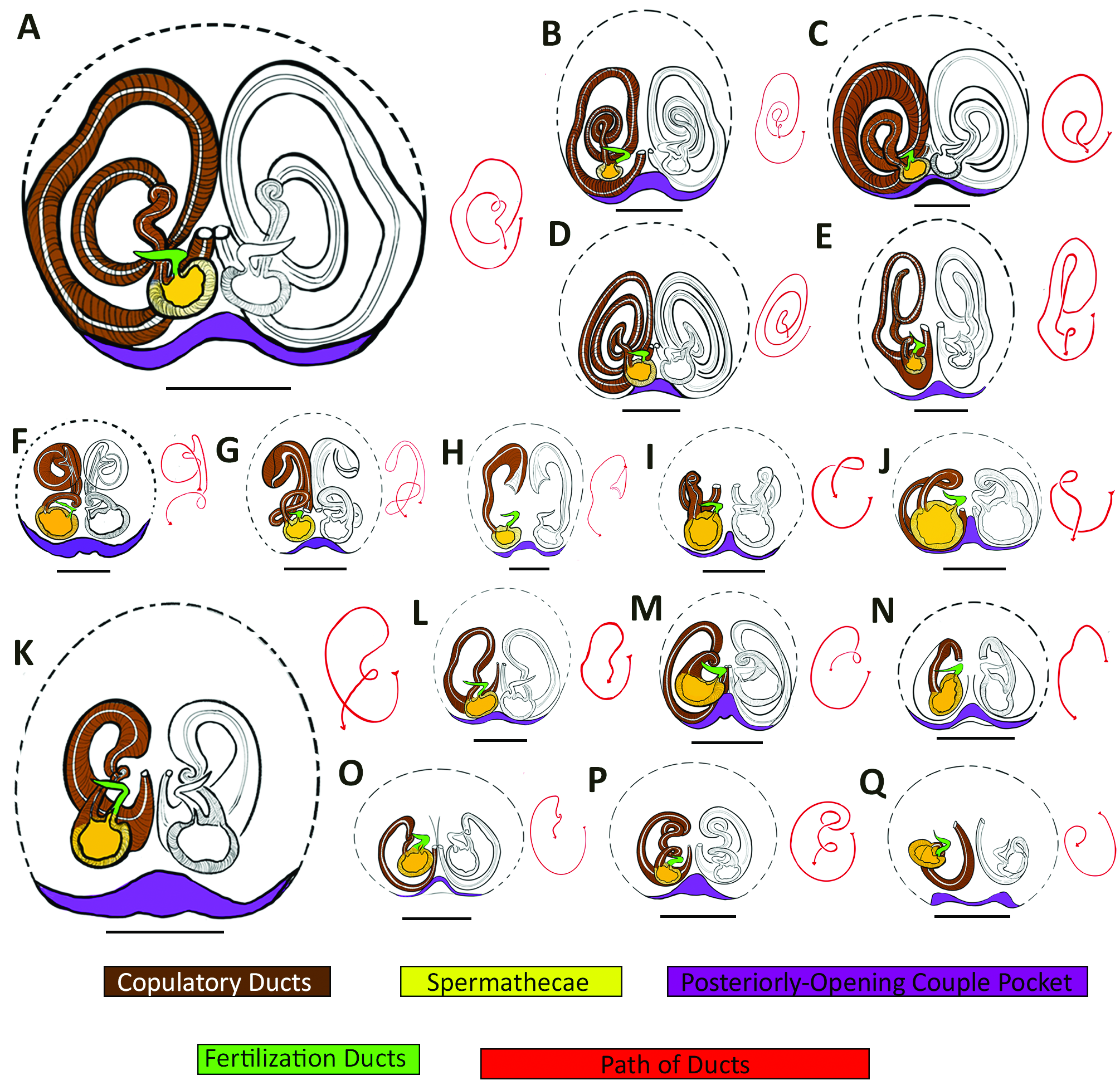
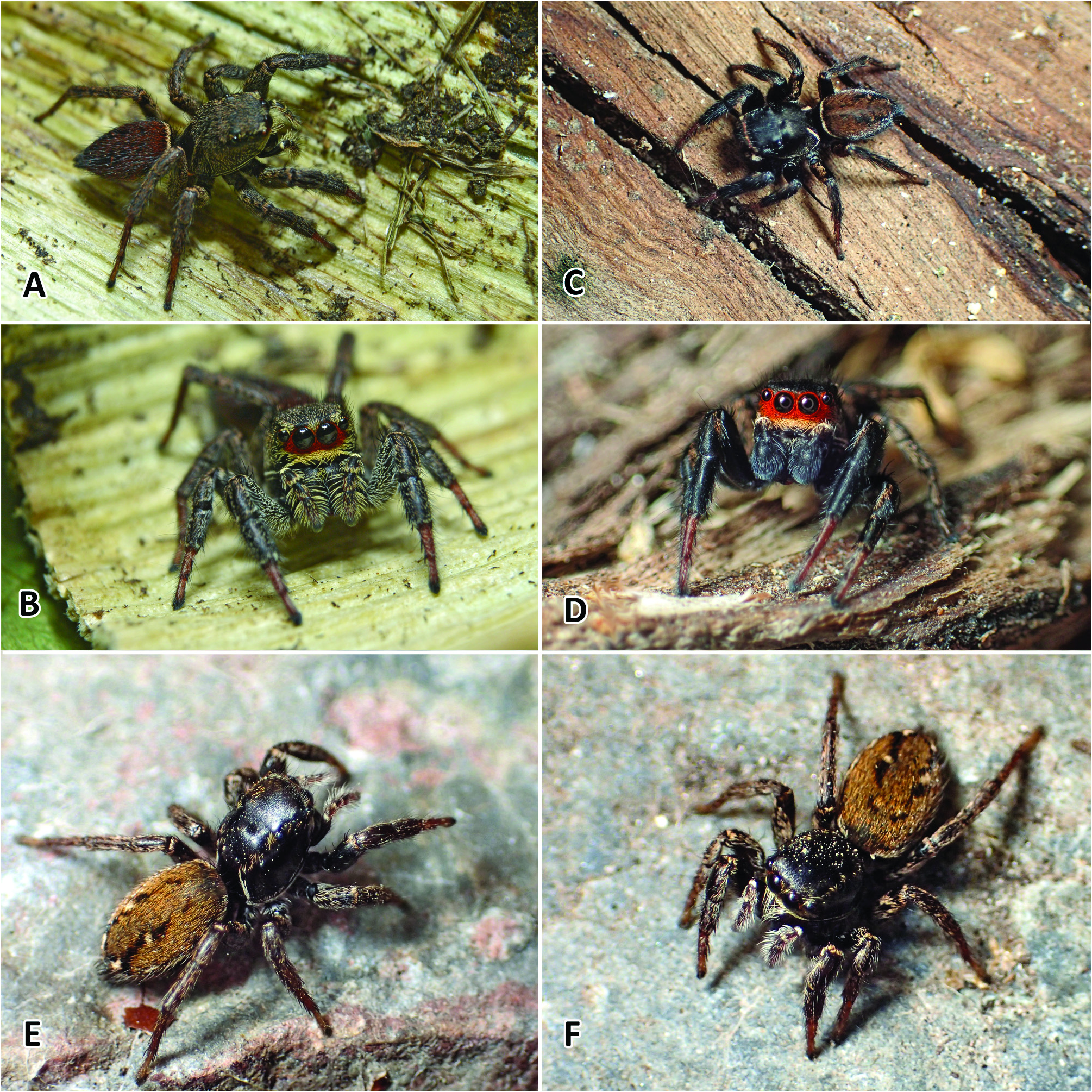
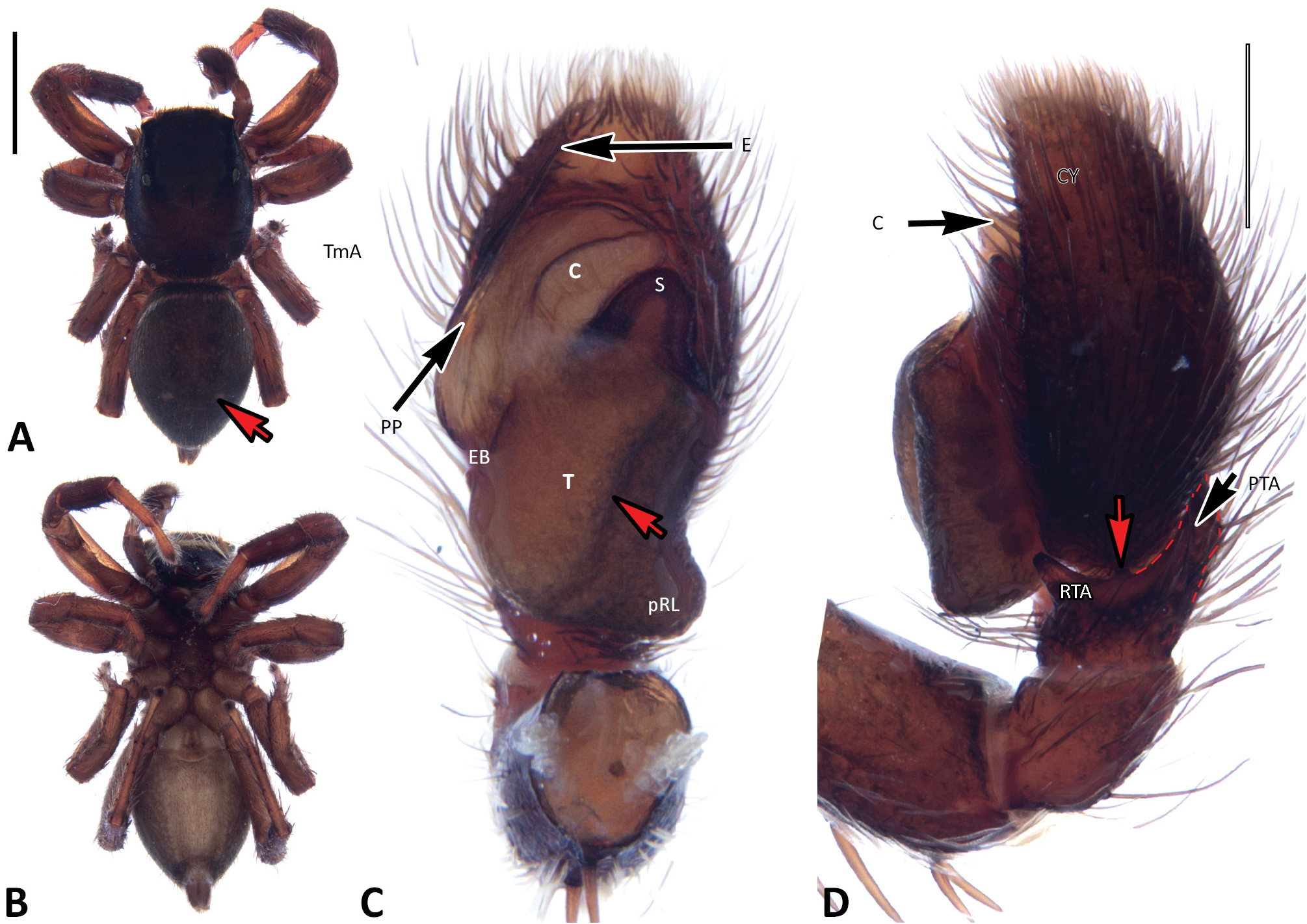
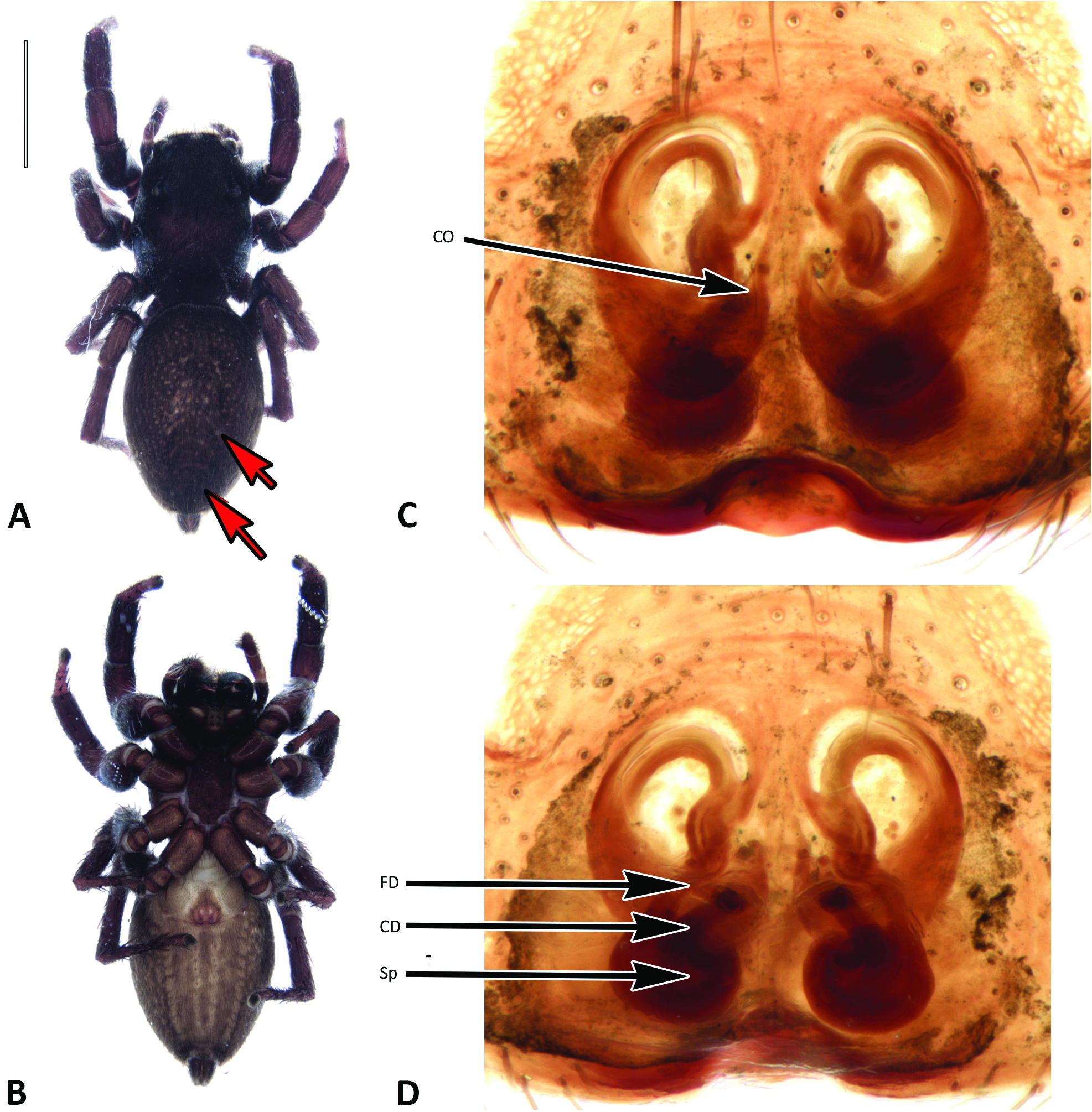
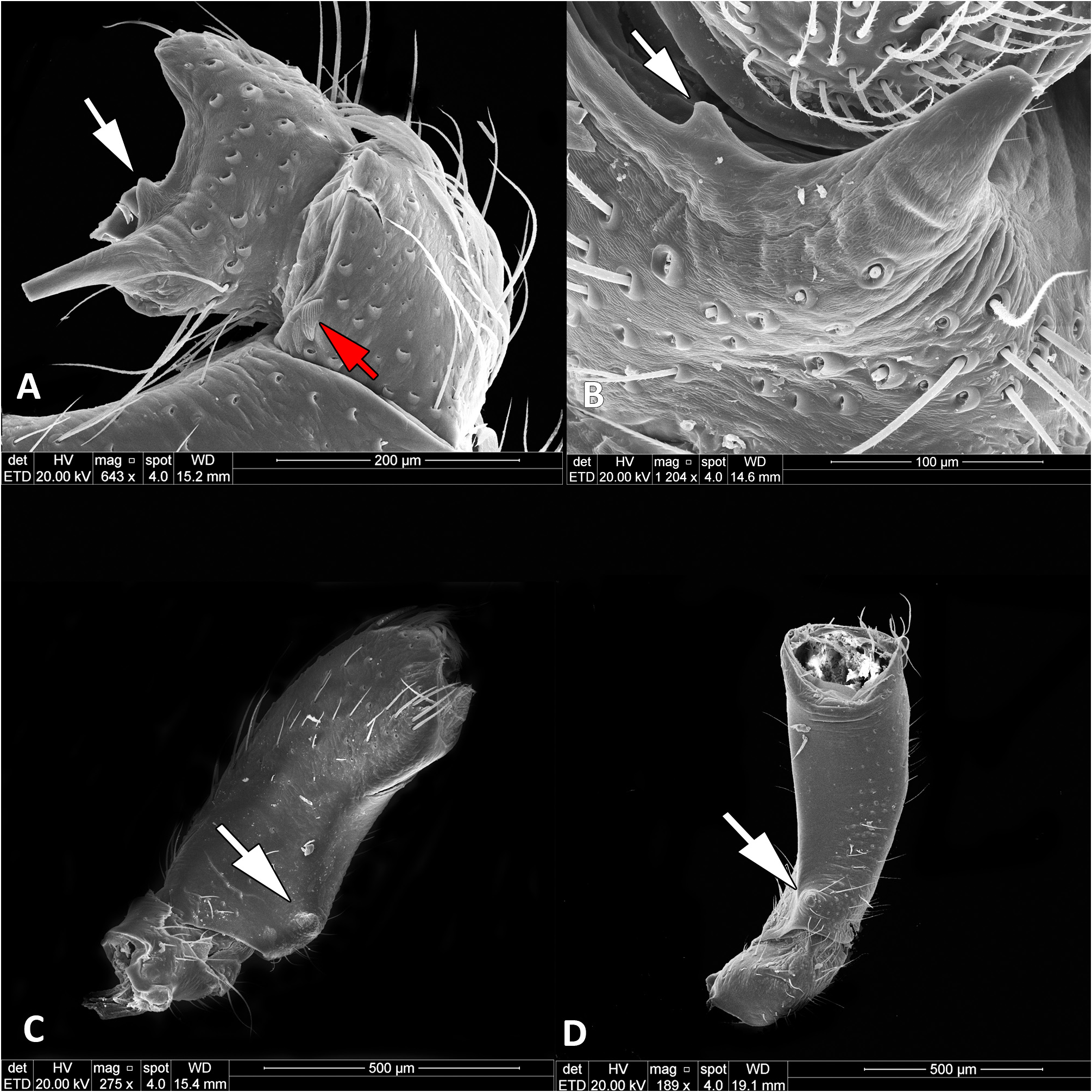
Figs 4D View FIGURE 4 , 6G–I View FIGURE 6 , 7K View FIGURE 7 , 32A–D View FIGURE 32 , 33A–D View FIGURE 33 , 34A–D View FIGURE 34 , 43B View FIGURE 43 , 53A–C View FIGURE 53
Zoobank. urn:lsid:zoobank.org:act:
Tullgrenella serrana Galiano, 1970: 350 View in CoL , fig. 37–42, 55, 64 ( holotype, male, ARGENTINA, Buenos Aires, Sierra de la Ventana [ 38°08’25.3”S 61°47’22.2”W], I.1967, M.E. Galiano leg. (MACN-Ar 6255), examined; Paratypes GoogleMaps : ditto, 1 male and 3 females (MACN-Ar 6256) GoogleMaps ; ditto, 1 female (MACN-Ar 6257) GoogleMaps ; Tandil [ 37°20’09.7”S 59°09’28.1”W], X.1957, E. Maury leg., 6 males and 4 females (MACN-Ar 6258) GoogleMaps ; La Rioja [ 29°25’29.1”S 66°51’55.7”W], XII.1941, F. Cáceres leg., 3 females (MACN-Ar 6259) GoogleMaps ; Córdoba, Calamuchita [ 32°10’31.8”S 64°36’04.5”W], XII.1940, M. Viana leg., 1 female (MACN-Ar 6260) GoogleMaps ; ditto, III.1958, M. Viana leg., male (MACN-Ar 6261) GoogleMaps ; ditto, V.1964, 1 female (MACN-Ar 6262) GoogleMaps ; ditto, XI.1968, A. Crespo & Galhardo leg., 1 female (MACN-Ar 6263), examined GoogleMaps ).
Diagnosis. Males of Tullgrenella serrana resemble other males of serrana group, by the embolus of left palp originating at about 9’clock position, but can be recognized by the C-shaped tegulum and the cradle-shaped conductor ( Fig. 33C View FIGURE 33 ). Females are similar to those of T. legalissima Marta & Hagopián , sp. nov. by the copulatory opening in the medial ventral plate of the epigynum, facing up, and the large posterior border of the epigynum ( Figs 7K View FIGURE 7 vs 7L, 34C–D vs 35C–D, see arrow), but can be recognized by the medial-posterior insertion of the spermathecae ( Figs 7K View FIGURE 7 , 34C–D View FIGURE 34 ).
Description. See Galiano (1970). We add the following complimentary data: Palp expanded ( Figs 6G–I View FIGURE 6 ): bulb turned 30º, and pars pendula not visible ( Figs 6G–I View FIGURE 6 ), conductor involved in the embolus movement ( Figs 6G–I View FIGURE 6 ). Basal haematodocha well-developed ( Figs 6G–I View FIGURE 6 ).
Material examined. BRAZIL, Rio Grande do Sul, Cambará do Sul [ 29°03’07.9”S 50°08’49.1”W], X.2004, M. V. Petry. leg., 1♀ ( MCTP 31126 View Materials ); ditto, V.2005, 1♂ ( MCTP 31131 View Materials ); Itaimbezinho [ 29°10’09.0”S 50°05’52.8”W], 13.X.1976, C. Becker leg., 1♀ ( MCN 4700 ); Cerrito [ 31°51’16.8”S 52°48’59.0”W], 06.III.2008, J. Rosado leg., 1♂ ( MCN 46708 ); Dom Feliciano, Fazenda Chapada [ 30°37’15.2”S 52°12’31.5”W], 18–19.III.2000, A. Bonaldo leg., 1♀ ( MCN 32224 ); Esmeralda, Estação Ecológica do Aracuri [ 28°13’29.6”S 51°10’02.3”W], 27.IX.1979, C. Becker leg., 1♀ ( MCN 8590 ); Guaíba [ 30°08’14.5”S 51°22’28.6”W], 02.XII.1995, A.A. Lise leg., 1♀ ( MCTP 12173 View Materials ); Santana do Livramento , Fazenda do Açude [ 30°53’21.7”S 55°31’12.8”W], 24.XI.2015, G. Silva & R. Ott leg., 1♀ ( MCN 53378 ); Fazenda Rincão dos Moraes [ 30°52’20.9”S 55°31’53.3”W], 30.XI.2013, Equipe PEDL leg., 1♀ ( MCN 53377 ) GoogleMaps . URUGUAY, Cerro Largo, Rincón de Paiva [ 32°9’46.54”S 53°44’53.66”W], IV.2012, Y. Hernandéz leg., 1♂ (FCE-Ar 4556); Paso Centurión [ 32°8’1.89”S 53°43’57.31”W], 13–16.IV.2017, PAIE leg., on rocks, 1♀ (FCE-Ar 8121); ditto, 30.VII.2016, A. Laborda leg., 2♀ (FCE-Ar 9550) GoogleMaps ; Durazno, Camping El Sauzal [ 33°21’56.86”S 56°31’1.10”W], 16. V.2019, no collector, 1♀ (FCE-Ar 6684) GoogleMaps ; Montevideo, Facultad de Veterinaria [ 34°53’49.55”S 56°8’22.98”W], 04.III.2014, M. Trillo leg., 1♀ (FCE-Ar 6803) GoogleMaps ; Río Negro 40°41’33.2”S 66°38’09.5”W], I.1959, P. San – Martin leg., 1♀ (MACN-Ar 42278); Ruta 24 Km 85, Estancia “Las Cadenas” [ 32°31’39.1”S 58°02’15.4”W], 04.I.2021, A. Mailhos leg., 1♂ (FCE-Ar 11149) GoogleMaps ; Rocha, 12 Km from Castillos [ 34°5’39.01”S 53°52’17.98”W], 06.IV.2017, A. Laborda leg., 1♂ (FCE-Ar 9538) GoogleMaps ; Salto, Arerunguá, Estancia “Los Venados” [31°43’65.32”S 56°44’12.13”W], III.2011, A. Laborda leg., 1♀ (FCE-Ar 2326); ditto, 16.IV.2012, 3♀ (FCE-Ar 9445); ditto, 22.XI.2011, 3♀ (FCE-Ar 9453); ditto, 16.II.2012, 3♂ (FCE-Ar 9459); ditto, 08.IX.2010, 1♀ (FCE-Ar 9460), all manually collected; Estancia de Arrieta , Naciente del Río Arapey [ 31° 9’1.39”S 56°52’23.58”W], 1996, A. Bentos leg., 1♀ (FCE-Ar 9286) GoogleMaps ; Treinta y Tres, Quebrada de los Cuervos C [ 32°55’35.01”S 54°27’36.68”W], IV.1990, Sección Entomología, Facultad de Ciencias leg., 1♀ (FCE-Ar 4696); ditto, VII.1990, 1♂ (FCE-Ar 4702); ditto, II.1990, 1♂ (FCE-Ar 4705); Quebrada de los Cuervos [ 32°55’33.33”S 54°27’31.10”W], 13–14–IV.1990, Sección Entomología, Facultad de Ciencias leg., 1♂ (FCE-Ar 6740) GoogleMaps . ARGENTINA, Buenos Aires, Abra de la Ventana [ 38°04’16.8”S 61°59’36.9”W], 15.I.1970, M.E. Galiano leg., 1♀ (MACN-Ar 42279); ditto, 1♀ (MACN-Ar 42280); Tandil, Rio de la Cascata [ 37°21’50.1”S 59°05’54.7”W], 1973, Cesari leg., 1♀ (MACN-Ar 42253); Delta , Tigre [ 34°25’31.2”S 58°34’45.7”W], X.1940, J.M. Viana leg., 1♂ (MACN-Ar 42275) GoogleMaps ; Cerro Negro [ 30°42’16.9”S 64°20’06.9”W], 09.VIII.1972, Cesari leg., 1♂ (MACN-Ar 42259); Magdalena [ 35°04’51.2”S 57°31’04.8”W], 07.II.1982, P. Goloboff & M. Ramírez leg., 1♀ (MACN-Ar 42260); Sierra de La Ventana [ 38°08’21.6”S 61°47’38.8”W], I.1984, G. Coutorier leg., 1♀ (MACN-Ar 42249); ditto, 02.XI.1972, M.E. Galiano leg., 1♀ (MACN-Ar 42251); ditto, 02.XI.1974, 1♂ (MACN-Ar 42252); ditto, II.1985, M. Miranda leg., 1♀ (MACN-Ar 42261); ditto, 22–29.XII.1991, A. Peretti leg., 6♀ (MACN-Ar 42262); ditto, XII.1971, M.E. Galiano leg., 1♀ (MACN-Ar 42263); ditto, I.1970, 1♂ (MACN-Ar 42264); ditto, II.1970, 1♂ (MACN-Ar 42265); ditto, X.1970, 1♀ (MACN-Ar 42266); 20.IX.–03.X.1972, M.E. Galiano leg., 1♂ (MACN-Ar 42267); ditto, II.1972, Cesari leg., 1♂ (MACN-Ar 42269); Sierra de Olavarría [ 36°56’22.0”S 60°09’30.6”W], 03.06. XII.1992, M. Ramírez leg., 1♂ (MACN-Ar 42254) GoogleMaps ; Córdoba, Calamuchita [ 32°10’31.8”S 64°36’04.5”W], 1958, J.M. Viana leg., 1♂ (MACN-Ar 42271); ditto, I.1955, 1♂ (MACN-Ar 65°01’01.5”W], 15.XI.1984, M. Miranda leg., 1♂ (MACN-Ar 42257); Vila Ciudad de America [ 31°47’38.4”S 64°30’12.8”W], 04.IV.1985, E. Maury leg., 1♀ (MACN-Ar 42270) GoogleMaps . Santiago del Estero [ 27°47’01.5”S 64°15’51.0”W], IV.1985, M.E. Galiano leg., 1♂ (MACNAr 42268); ditto, 14♂ 12♀ (MACN-Ar 42277); ditto, 03.IV.1985, 1♀ (MACN-Ar 1148); Ojo d’Agua [ 32°19’19.7”S 63°34’11.8”W], IV.1985, M.E. Galiano leg., 1♂ (MACN-Ar 42274); ditto, 12.IV.1974, Cesari leg., 1♂ (MACN-Ar 42274); ditto, II.1985, M. Miranda leg., 1♀ (MACN-Ar 42250); dito, IV.1985, M.E. Galiano leg., 1♂ (MACNAr 42256); ditto, 02.IV.1985, 1♂ (MACN-Ar 42258) GoogleMaps . Salta [ 24°46’52.0”S 65°25’19.4”W], XII.1954, M. Birabén leg., 1♀ (MACN-Ar 42255); Departamento Lerma [ 24°48’01.2”S 65°24’27.7”W], V.1933, J.B. Daguerre leg., 1♀ (MACN-Ar 33476) GoogleMaps .
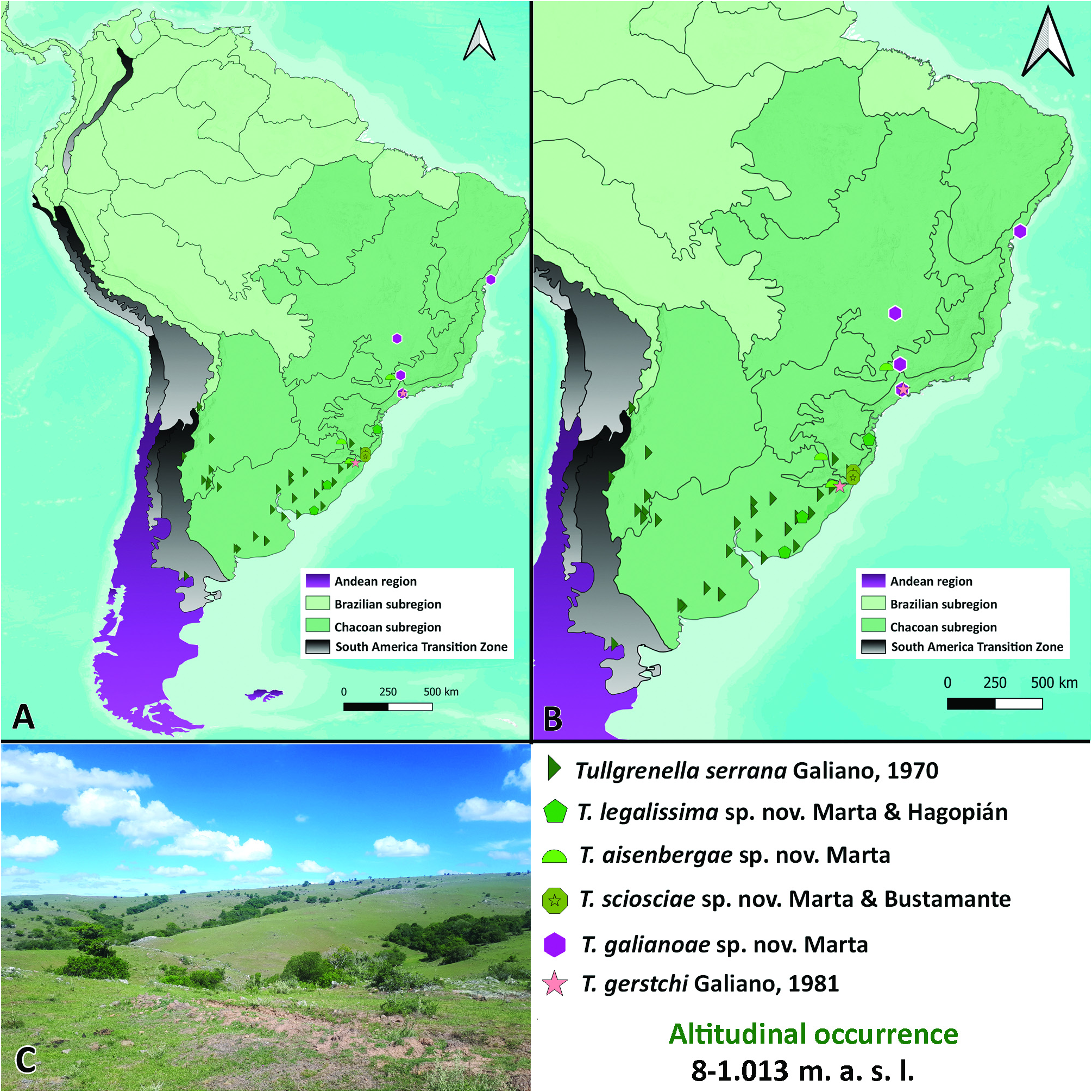
Distribution. Brazil ( Rio Grande do Sul), Uruguay ( Cerro Largo, Durazno, Montevideo, Río Negro, Rocha, Salto, Treinta y Tres), and Argentina ( Buenos Aires, Córdoba, Salta and Santiago del Estero) ( Figs 53A–B View FIGURE 53 ).
Natural history. Some individuals from Sierra de La Ventana, Buenos Aires, were collected under rocks. The subadult males resemble females in coloration. Only in the last instars do they acquire the characteristics of adult males ( Galiano 1970). Some individuals from Uruguay were collected on and under rocks, and one female was found with a larva of Dicromantispa gracilis (Erichson, 1839) ( Neuroptera : Mantispidae : Mantispinae ) attached to its pedicel ( Hagopián & Laborda 2020) on rocks. Found in the Chacoan subregion, with a few records in the South American Transitional Zone, but not exceeding it ( Figs 53A–B View FIGURE 53 ). The variation in altitudinal occurrence of this species is 8–1013 m a. s. l. ( Figs 53A–B View FIGURE 53 ).

| V |
Royal British Columbia Museum - Herbarium |
| R |
Departamento de Geologia, Universidad de Chile |
No known copyright restrictions apply. See Agosti, D., Egloff, W., 2009. Taxonomic information exchange and copyright: the Plazi approach. BMC Research Notes 2009, 2:53 for further explanation.
|
Kingdom |
|
|
Phylum |
|
|
Class |
|
|
Order |
|
|
Family |
|
|
Genus |

Tullgrenella serrana Galiano, 1970
| Marta, Kimberly S., Bustamante, Abel A., Hagopián, Damián, Teixeira, Renato A., Brescovit, Antonio D., Valiati, Victor H. & Rodrigues, Everton N. L. 2024 |
Tullgrenella serrana
| Galiano, M. E. 1970: 350 |