
Neoseiulus sekeroglui Döker & Stathakis, 2014
|
publication ID |
https://dx.doi.org/10.11646/zootaxa.3827.3.3 |
|
publication LSID |
lsid:zoobank.org:pub:70168130-F212-4BE9-A115-A1CC424C165D |
|
persistent identifier |
https://treatment.plazi.org/id/039ECE0A-FFB3-FFCD-ED9B-FDBAFC40F968 |
|
treatment provided by |
Plazi |
|
scientific name |
Neoseiulus sekeroglui Döker & Stathakis |
| status |
n. sp. |
Neoseiulus sekeroglui Döker & Stathakis n. sp.
Diagnosis. This new species belongs to the barkeri species group of Chant, because the atrium of the spermatheca is forked at the juncture with the major duct, and to the womersleyi species subgroup of Schicha because the atrium is enlarged, deeply forked at the juncture with the major duct, joined to the calyx by a short neck; calyx saccular flaring distally; dorsal shield smooth, bearing six pairs of solenostomes and six pairs of small pores; all dorsal setae smooth except for Z 4 and Z 5; peritreme extending to level of setae j 1; genu II with eight setae; one pair of small solenostomes posteromedian of JV 2; sternal shield with three pairs of setae; fixed digit of chelicera with five teeth and movable digit with one tooth.
Female (n= 7). Dorsum ( Figure 1 View FIGURES 1 – 5 ). Dorsal setal pattern 10 A: 9 B (r 3 and R 1 off shield). Dorsal shield oval with waist, sclerotised, smooth with a few lateral striations, bearing six pairs of solenostomes (between j 3 and z 2, anteromedian to z 4, posteromedian to z 5, posterior to s 4, anteromedian to Z 1, and anterior to S 5); eight pairs of small pores (sensilla) visible on dorsal shield; muscle-marks (sigilla) visible, mostly on podosoma, length of dorsal shield (j 1 –J 5) 314 ( 301–333), width (distance between bases of s 4) 146 ( 143–158) (distance between bases of S 2) 160 ( 150–178). All dorsal setae smooth except for Z 4 and Z 5, which are slightly serrated. Measurements of dorsal setae as follows: j 1 15 ( 14–18), j 3 23 ( 20–26), j 4 15 ( 14–16), j 5 14 ( 12– 16), j 6 14 ( 12–16), J 2 17 ( 14–20), J 5 11 ( 10–12), z 2 20 ( 18–22), z 4 21 ( 20–24), z 5 14 ( 12–18), Z 1 21 ( 20–22), Z 4 44 ( 40–46), Z 5 57 ( 55–59), s 4 31 ( 28–36), S 2 33 ( 30–34), S 4 31 ( 30–36), S 5 24 ( 22–28), r 3 21 ( 20–22) and R 1 20 ( 18–22).
Peritreme. Extending to level of setae j 1.
Venter ( Figure 2 View FIGURES 1 – 5 ). Ventral setal pattern 14:JV– 3: ZV. Sternal shield smooth, lightly sclerotised, with three pairs of setae (ST 1, ST 2 and ST 3) and two pairs of pores (pst 1 and pst 2); length (ST 1 –ST 3) 64 ( 61–67), width (distance between setae ST 2) 60 ( 57–63); metasternal setae ST 4 and a pair of pores (pst 3) on metasternal shields. Genital shield smooth; width at level of genital setae (ST 5) 60 ( 57–65). Ventrianal shield pentagonal, with transverse striations with three pairs of pre-anal setae (JV 1, JV 2 and ZV 2), anal setae (a 1, a 2 and a 3), one pair of small solenostomes posteromedian of JV 2. Length of ventrianal shield 109 ( 105–121), width 98 ( 93–105). Setae JV 4, JV 5, ZV 1, ZV 3 and six pairs of pores on integument surrounding ventrianal shield. Setae JV 5 smooth, much longer than other ventral setae, 43 ( 40–46) in length.
Chelicera ( Figure 3 View FIGURES 1 – 5 ). Fixed digit 31 ( 28–32) long with five visible teeth with pilus dentilis; movable digit 29 ( 28–30) long with one tooth.
Spermatheca ( Figure 4 View FIGURES 1 – 5 ). Calyx saccular, flaring distally 21 ( 20–24) in length; atrium enlarged, deeply forked at juncture with major duct, joined to calyx by a short neck, blending into the calyx; minor duct not visible.
Legs ( Figure 5 View FIGURES 1 – 5 ). Length of legs (base of coxae to base of claws): leg I 338 ( 329–364); leg II 257 ( 226–273); leg III 242 ( 222–261); leg IV 334 ( 317–360). GeII, GeIII and GeIV with eight, seven and seven setae respectively; BtIV with one macroseta 68 ( 65–73) in length.
Male. Unknown.
Type material. Holotype female and four paratype females, Çukurova-Adana, 24 April 2013, on Pallenis spinosa (L.) CASS. ( Asteraceae ). Two female paratypes, Çukurova University Campus-Adana, 18 May 2013, on P. spinosa .
Remarks This new species is similar to N. alpinus (Schweizer) , N. marginatus (Wainstein) , N. neoaurescens Moraes & Mesa and Neoseiulus saudiensis Negm, Alatawi & Aldryhim , which are also classified in the womersleyi species subgroup. Differences between Neoseiulus sekeroglui Döker & Stathakis n. sp. and the related species are given in Table 1.
Etymology. This new species is named in honor of Professor Doctor Erdal Şekeroğlu a pioneer in the field of acarology in Turkey.
Depository. The holotype female and four paratype females are deposited in the mite collection of the Acarology Laboratory, Department of Plant Protection, Çukurova University, Adana, Turkey. One paratype female is deposited in the mite collection in the Laboratory of Agricultural Zoology and Entomology, Agricultural University of Athens, Greece. One female paratype will also be deposited in the Natural History Museum, London, UK.
Typhlodromus ( Typhlodromus) antakyaensis Stathakis & Döker n. sp.
Diagnosis. This new species belongs to the pyri species group of Chant & Yoshida-Shaul. The dorsal shield is strongly reticulated, bearing four pairs of solenostomes and 11 pairs of small pores; all dorsal setae are smooth except for Z 4 and Z 5; peritreme extending to level of setae z 2; genu II with eight setae; ventrianal shield with four pairs of pre-anal setae and without solenostomes; sternal shield with two pairs of setae; fixed digit of chelicera with four teeth and movable digit with one tooth; calyx of spermatheca saccular and atrium incorporated with the calyx.
Female ( n = 4). Dorsum ( Figure 6 View FIGURES 6 – 10 )—Dorsal setal pattern 12 A: 7 A (r 3 and R 1 off shield).
Dorsal shield oval with waist, sclerotised, reticulated and bearing four pairs of solenostomes (between j 4 and z 4, posteromedian to s 6, anterior to Z 4, and anterior to Z 5); 11 pairs of small pores (sensilla) visible on dorsal shield; muscle marks (sigilla) visible, mostly on podosoma, length of dorsal shield (j 1 –J 5) 316 ( 309–325), width (distance between bases of s 4) 144 ( 139–154), width (distance between bases of S 2) 169 ( 150–182). All dorsal setae smooth except for Z 4 and Z 5, which are slightly serrated. Measurements of dorsal setae as follows: j 1 25 ( 24–28), j 3 33 ( 32–34), j 4 19 ( 18–20), j 5 19 ( 18–20), j 6 21 ( 20–24), J 2 24 ( 20–30), J 5 5 ( 4–6), z 2 20 ( 20–22), z 3 29 ( 28–30), z 4 26 ( 24–30), z 5 19 ( 18–20), Z 4 47 ( 46–48), Z 5 66 ( 61–71), s 4 31 ( 30–34), s 6 40 ( 36–42), S 2 39 ( 38–40), S 4 42 ( 40–44), r 3 29 ( 28–30), and R 1 25 ( 24–26). Peritreme extending to level of setae z 2.
Venter ( Figure 7 View FIGURES 6 – 10 ). Ventral setal pattern 15:JV:ZV. Sternal shield smooth, lightly sclerotised, with two pairs of setae (ST 1 and ST 2) and two pairs of pores (pst 1 and pst 2); length (ST 1 –ST 2) 34 ( 34–36), width (distance between setae ST 2) 56 ( 55–57). Sternal setae ST 3 on separate platelets; metasternal setae ST 4 and a pair of pores (pst 3) on metasternal shields. Genital shield smooth; width at level of genital setae (ST 5) 61 ( 59–63). Ventrianal shield pentagonal, with transverse striations, with four pairs of pre-anal setae (JV 1, JV 2, JV 3, and ZV 2), anal setae (a 1, a 2, and a 3), muscle marks posterolaterally, without solenostomes. Length of ventrianal shield 104 ( 99–109), width 93 ( 91–95). Setae JV 4, JV 5, ZV 1, ZV 3, and six pairs of pores on integument surrounding ventrianal shield. Setae JV 5 smooth, much longer than other ventral setae, 57 ( 55–59) in length.
Chelicera ( Figure 8 View FIGURES 6 – 10 ). Fixed digit 29 ( 28–30) long with four visible teeth, three of them apically and with pilus dentilis; movable digit 29 ( 28–30) long with one tooth.
Spermatheca ( Figure 9 View FIGURES 6 – 10 ). Calyx saccular 20 ( 18–22) in length; atrium incorporated with calyx; major duct broad, minor duct not visible.
Legs ( Figure 10 View FIGURES 6 – 10 ). Leg lengths (base of coxae to base of claws) as follows: leg I 290 ( 281–297); leg II 249 ( 242–261); leg III 248 ( 242–253); leg IV 328 ( 313–337). GeII, GeIII, and GeIV with eight, seven and seven setae, respectively; macrosetae GeIV, TiIV, and BtIV 22 ( 20–24), 25 ( 22–28) and 48 ( 46–50) long, respectively.
Male. Unknown.
Type material. Holotype female and one paratype female, Samandağ-Antakya, 4 October 1996, on Phaseolus vulgaris L. ( Fabaceae ). Two paratype females collected at Samandağ-Antakya, 7 September 1997, on Ph. vulgaris .
Depository. The holotype female and three female paratypes are deposited in the mite collection of the Acarology Laboratory, Department of Plant Protection, Çukurova University, Adana, Turkey.
Remarks. This new species is similar to T. ( T.) athiasae Porath & Swirski , T. ( T.) octogenipilus Kreiter, Tixier & Duso , T. ( T.) pyri (Scheuten) , T. ( T.) sirikariensis Stathakis, Kapaxidi & Papadoulis and T. ( T.) tiliae (Oudemans) . Differences between Typhlodromus ( T.) antakyaensis Stathakis & Döker n. sp. and the related species are given in Table 2.
Etymology. The name of this new species is derived from the Antakya province where it was collected.
T. ( T.) antakyaensis T. ( T.) athiasae T. ( T.) octogenipilus T. ( T.) pyri T. ( T.) sirikariensis Reference new species Porath & Tixier et al., 2010 Chant & Yoshida- Stathakis et al.,
Swirski, 1965 Shaul, 1987 2012 With this study, number of known phytoseiid species from Turkey reached 69. Among them, there are natural populations of commercially available phytoseiid mites such as Amblyseius swirskii Athias-Henriot , Iphiseius degenerans (Berlese) , Neoseiulus californicus (McGregor) , N. cucumeris (Oudemans) and Phytoseiulus persimilis Athias-Henriot. This and previous studies clearly showed that Turkey has great potential to supply new phytoseiid mites due to its geographical position (bridge between Asia and Europe) and its diverse flora of wild endemic plants which could serve as host for these predators. However, very little information is available about new species and/or newly recorded species regarding their food habits and biology. Further studies should be conducted to determine their possible use in biological control programs in Turkey.

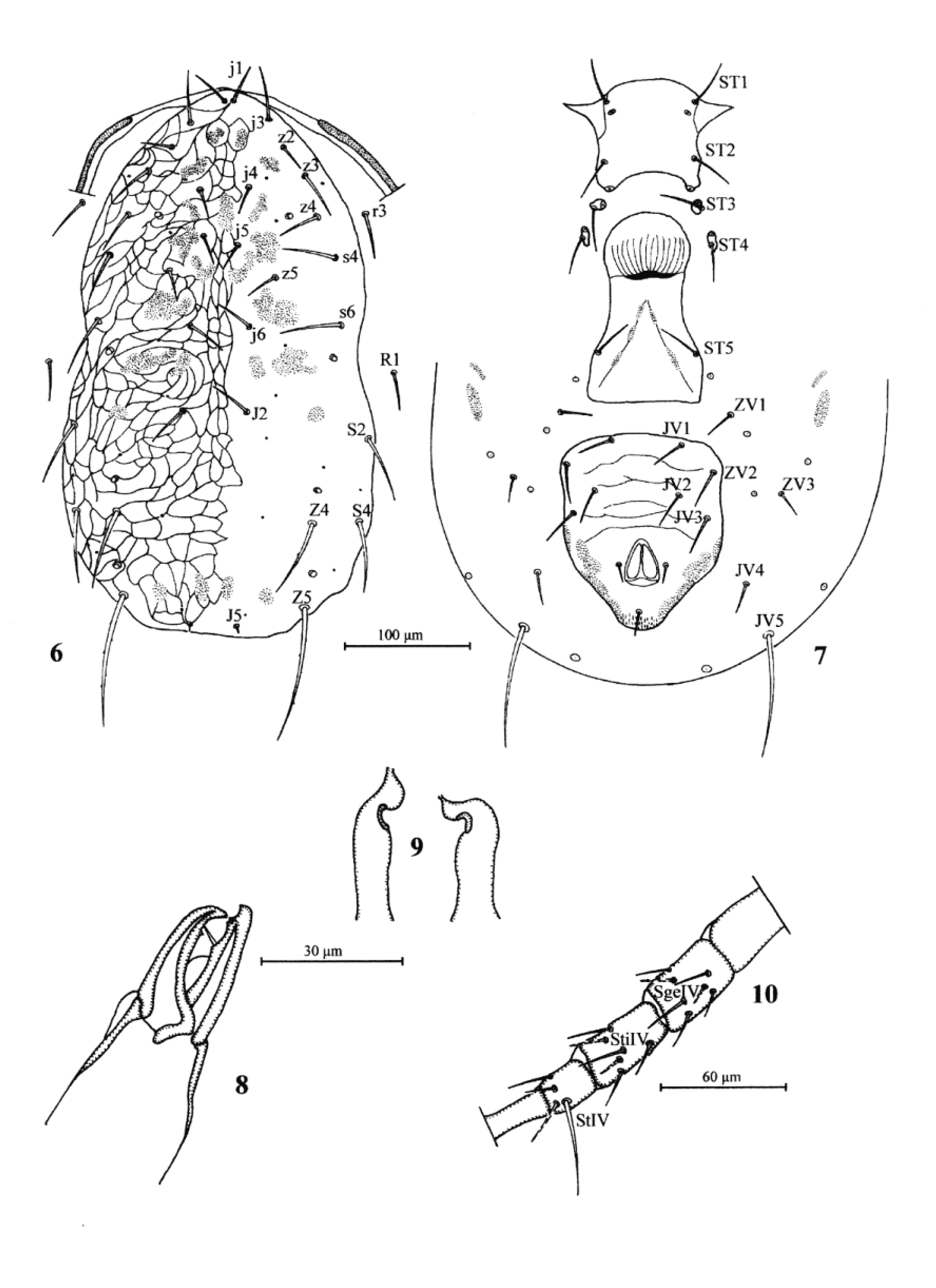
TABLE 1. Differences between Neoseiulus sekeroglui Döker & Stathakis and related species.
| N. sekeroglui | N. alpinus | N. neomarginatus | N. neoaurescens | N. saudiensis | |
| Reference | new species | Papadoulis et al., 2009; Evans, 1987 | Stathakis et al., 2013 | Moraes et al., 1988 | Negm et al., 2012 |
| Dorsal shield | smooth | reticulated | smooth | smooth | reticulated |
| Serrated dorsal setae | Z4-Z5 | – | Z4-Z5 | most setae | Z4-Z5 |
| No of pairs of solenostomes on dorsal shield | 6 | 7 | 7 | 7 | 7 |
| No of setae on Genu II | 8 | 7 | 8 | 8 | 7 |
| Spermatheca | with a short neck blending into calyx; calyx saccular | with a short slender neck; calyx trumpet- like | with a long neck; calyx V-shaped | with a short slender neck; calyx saccular | with a long slender neck; calyx saccular |
| CASS |
Chinese Academy of Sciences, Shenyang |
No known copyright restrictions apply. See Agosti, D., Egloff, W., 2009. Taxonomic information exchange and copyright: the Plazi approach. BMC Research Notes 2009, 2:53 for further explanation.