
Leiopathes glaberrima (Esper, 1792)
|
publication ID |
https://doi.org/10.11646/zootaxa.4692.1.1 |
|
publication LSID |
lsid:zoobank.org:pub:F054DC68-6A7E-4C80-9094-8ECCA4502CD6 |
|
persistent identifier |
https://treatment.plazi.org/id/038F878B-C906-FF81-F9EB-FACDFEBAF006 |
|
treatment provided by |
Plazi |
|
scientific name |
Leiopathes glaberrima (Esper, 1792) |
| status |
|
Leiopathes glaberrima (Esper, 1792)
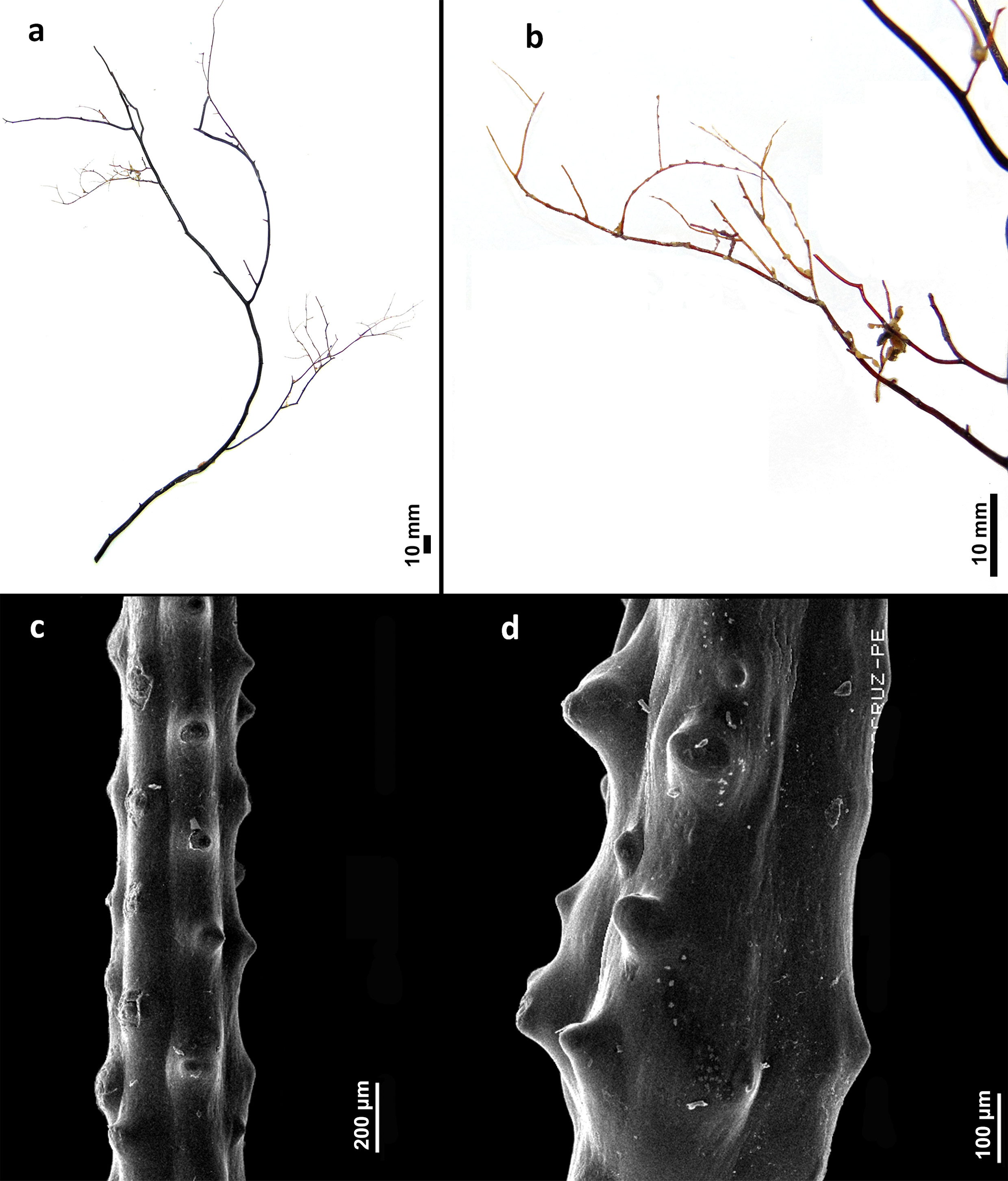
Figs. 10 View FIGURE 10 , 11 View FIGURE 11 , 12 View FIGURE 12
? Antipathes clathrata Pallas, 1766: 212 ; Esper, 1788: pl. 2; Esper, 1792: 141; Lamarck 1815: 475; Lamarck, 1816: 309; Lam-
ouroux, 1816: 382.? Arachnopathes clathrata Milne–Edwards, Haime, 1857: 320 ; Brook, 1889:164; Antipathes glaberrima Esper, 1792: 160 , pl. 9 (1–5); Lamarck, 1815: 471; Lamarck, 1816: 306; Dana, 1846: 585; Pourtalès,
1880: 118, pl. 3(2, 28); Koch, 1889:194; Pesch, 1914: 86; Pax, Müller, 1955:107; 1964:104; Tyler, Zibrowius, 1992: 217. Leiopathes glaberrima Haime, 1849: 284 –287; Gray, 1857: 290; Milne–Edwards, Haime, 1857: 322; Brook, 1889: 95, pl.4
(8–9), pl.12 (21–22), pl.15 (3–5); Silberfeld, 1909: 4; van Pesch, 1914: 76–77; Gravier, 1918a: 343;1918b: 225;, 1921: 14;
Opresko, 1974: 116; Grasshoff, 1989: 215; Grasshoff, 1990: 361; Van der Land & Opresko, 2001:109; Opresko, 1998: 99,
100, 101, 107, 110; Molodtsova, 2011: 52–64; fig 3, 5, 6; Wagner e Opresko, 2015: 277–289; fig 5; Molodtsova, 2014:
4–5; Grasshoff, 1985a: 73.? Antipathes boscii Lamouroux, 1816: 375 , pl. 14 (5); Dana, 1846: 584; Milne–Edwards, Haime, 1857: 318.? Leiopathes boscii Gray, 1857: 290 .? Antipathes dichotoma (non Pallas, 1766) Gray, 1832: 41.? Antipathes dissecta Duchassaing, Michelotti, 1864: 142 ; Pourtalès, 1871: 53. non Leiopathes glaberrima Johnson, 1899: 817 ; Opresko & Baron–Szabo, 2001: 16–17 (complete list of synonyms).
Type and type locality. SMF 5887 About SMF ( holotype), Sea of Naples , depth unknown .
Material examined. ERG–165, Rio Grande Rise, 30º12’49.68”S, 36º50’9.6”W; 750–800 m, date: 11/02/2012 ( MNRJ 8599, 10 frozen specimens). PROA , off Santa Catarina, Brazil, 28º15’0”S, 47º7’0.001”W; 360 m, date: 23/09/2002 ( MNRJ 6585, 1 fragment). Rio Grande Rise, 30º44’4.2”S, 36º44’51”W; Initial depth: 650 m; final depth: 585 m. PROERG/ CPRM. ERG–185. Dredge 03/12/2012 ( MNRJ 8579, 1 fragment). Rio Grande Rise, 30º12’49.68”S, 36º50’9.6”W; Initial depth: 750 m; final depth: 800 m. PROERG/ CPRM. EST.: ERG–165. Date 11/02/2012. Amostr.: Dredge ( MNRJ 8593, 35 fragments).
Diagnosis. Corallum with long, crooked and irregular branches. Terminal branchlets usually 1–2 cm long, but up to 4 cm; 0.2–0.7 mm in basal diameter; 1–2 cm apart from each other, and usually arising at right angles from the branchlets from which they depart. Spines small, conical, simple and smooth; 0.02–0.06 mm high; absent on larger branches and stem. Polyps variable in size, 0.7–2.0 mm in diameter; equally wide in both sagittal and transverse axes; or slightly longer along sagittal axis; occurring in a density of 4–7 per centimeter (adapted from Opresko & Baron–Szabo, 2001 and Molodtsova, 2011).
Description of Brazilian specimens. Corallum sympodial irregularly branched, without pinnules, with branches in more than one plane ( Fig. 10a View FIGURE 10 ). Corallum usually branched up to the 8th order ( Fig. 11a View FIGURE 11 ). Terminal branchlets arising irregularly on lower order branches ( Fig. 10b View FIGURE 10 ). Terminal branchlets measuring between 3 and 40 mm in length, more common 7–30 mm ( Fig. 11b View FIGURE 11 ). Diameter of terminal branchlets near the base between 0.19 and 0.5 mm, usually close to 0.3 mm. Diameter of tips of terminal branchlets approximately 0.1 mm, ranging between 0.05 and 0.19 mm. Corallum brownish. Angle of insertion of branches between 30° and 70°, being more common between 40° and 60°. Distance between adjacent branchlets 2–5 mm, ranging from 3 to 8 mm, with 3–5 branchlets per centimeter. Spines arranged in up to 6 rows (in lateral view), but usually 3–4, absent on larger branches and stem, with tips round and smooth ( Fig. 10 View FIGURE 10 c–d; Fig. 11 View FIGURE 11 c–d). Spines 0.02–0.07 mm high, being more common 0.02–0.05 mm. Width of base of spines varying between 0.036 and 0.100 mm. Spines in a same row 0.09–0.95 mm apart, in densities of 2–5 spines per millimeter. Polyps 0.9–2.3 mm in diameter, with density of 4–6 polyps per centimeter.
Remarks. Leiopathes glaberrima (Esper, 1792) is the oldest name within the family Leiopathidae , and has been mistakenly reported for several localities ( Molodtsova, 2011; Wagner & Opresko, 2015). The species was redescribed by Opresko & Baron-Szabo (2001), based on the specimens collected by Brook (1889), since the type is incomplete. The specimen described here presents terminal branchlets with a slightly thicker basal diameter than that described by Molodtsova (2011) (up to 0.50 mm in our specimens, and about 0.22 mm in Molodtsova, 2011), but within the range provided by Opresko & Baron-Szabo (2001) ( 0.5–0.7 mm). The present record of Leiopathes glaberrima (off Santa Catarina), reinforces the tropical/temperate distribution indicated for this species ( Wagner & Opresko, 2015).
Distribution. Wide geographic distribution, with type locality in the Mediterranean Sea, Naples Sea ( Opresko & Baron–Szabo, 2001); north Atlantic, including Caribbean Sea ( Wagner & Opresko, 2015); southwestern Atlantic, Rio Grande Rise (herein), and Brazil, off Santa Catarina (herein) ( Fig. 12 View FIGURE 12 ); from 37 m ( Opresko, 2009) to 2400 m depths (Smithsonian, USNM 1112700, identified by D. M. Opresko; available in <http://collections.nmnh.si.edu/ search/iz/>).


| MNRJ |
Museu Nacional/Universidade Federal de Rio de Janeiro |
No known copyright restrictions apply. See Agosti, D., Egloff, W., 2009. Taxonomic information exchange and copyright: the Plazi approach. BMC Research Notes 2009, 2:53 for further explanation.
|
Kingdom |
|
|
Phylum |
|
|
Class |
|
|
Order |
|
|
Family |
|
|
Genus |

Leiopathes glaberrima (Esper, 1792)
| Lima, Manuela M., Cordeiro, Ralf T. S. & Perez, Carlos D. 2019 |
Arachnopathes clathrata Milne–Edwards, Haime, 1857: 320
| Milne-Edwards, Haime 1857: 320 |
Antipathes glaberrima
| Esper 1792: 160 |
Antipathes clathrata
| Pallas 1766: 212 |